AI researchData scienceML engineering
AI researcher & data scientist
I build machine learning systems for language, medical imaging and document retrieval, and I measure how far their answers can be trusted.
- M.Sc. in Artificial Intelligence M.Sc. in AI
- GPA 19.58 / 20
- Research Research
- NLP, LLM evaluation, retrieval, medical imaging
- Open to Open to
- PhD positions, research and industry roles
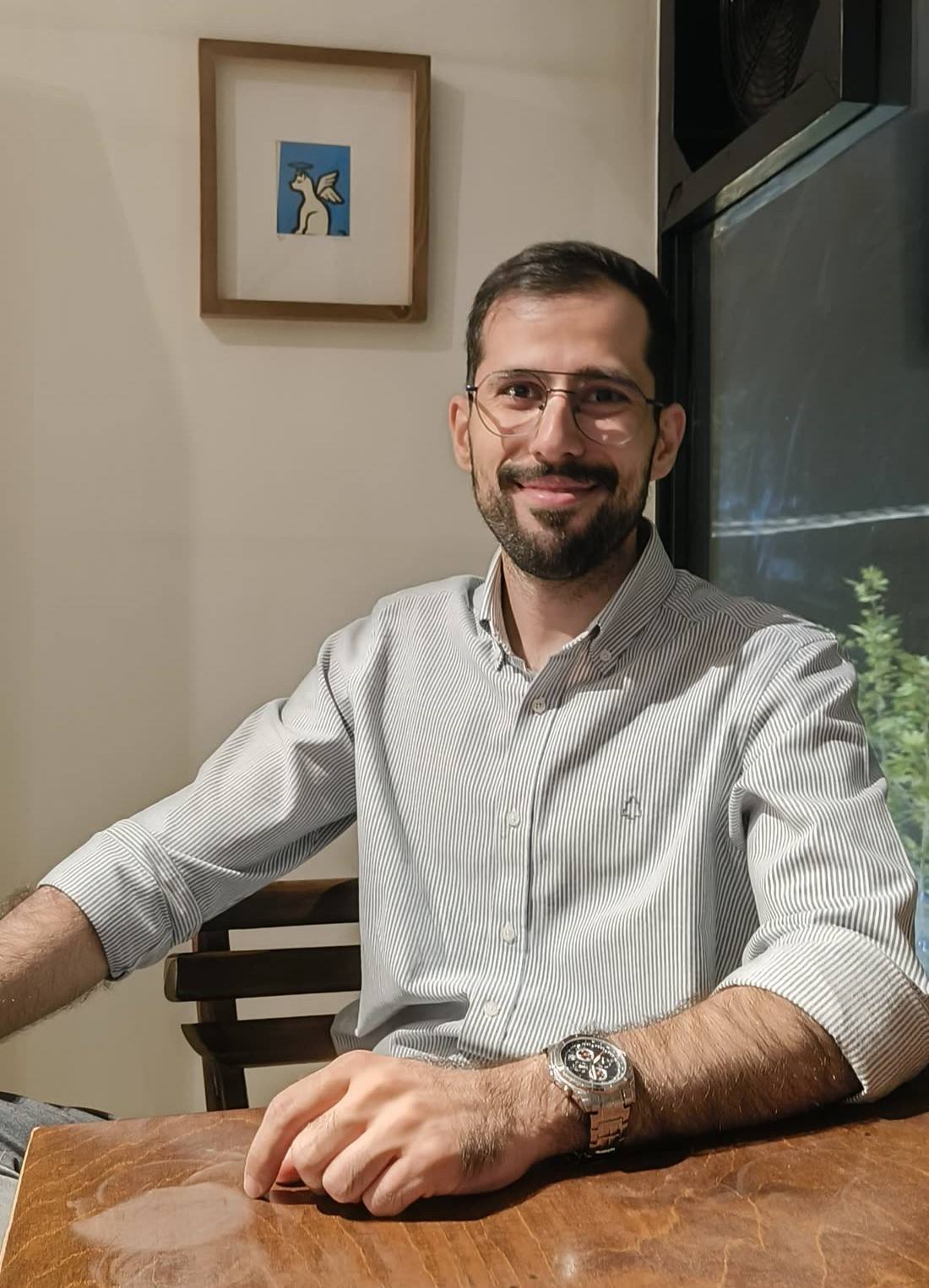
About
Research-first, build-minded.
I am an M.Sc. candidate in Artificial Intelligence and a data scientist, focused on turning careful research into machine learning systems that work in practice.
My work spans Persian sentiment analysis, medical image segmentation, retrieval-augmented generation and the evaluation of large language models. I care about experiments that are clean enough to reproduce and systems that are understandable enough to trust.
I have been a teaching assistant for three university courses, and I now teach in the open through The AI Path, a free course that goes from Python to AI agents.
- M.Sc. GPA (4.0 / 4.0)
- 19.58 / 20
- expected thesis defense
- Jan 2027
- university courses as teaching assistant
- 3
- model answers scored in my latest study
- 32,000
Focus
What I work on, and with what.
Toolkit
- Programming
- Python, SQL, Java, JavaScript, HTML/CSS
- Machine learning & deep learning
- PyTorch, TensorFlow, scikit-learn, NumPy, pandas, OpenCV, NLTK, XGBoost, LightGBM
- NLP, LLMs & retrieval
- Transformers (ParsBERT, BERT), Retrieval-augmented generation, LangChain, ChromaDB, Embedding-based retrieval, vLLM
- Tools
- Git/GitHub, Linux (Ubuntu/Debian), Anaconda, Jupyter, Google Colab, PyCharm, VirtualBox/VMware, Minitab
Selected work
Four projects. What came out of each.
-
When the document is wrong
Open language models repeat a contradicting document 49–68% of the time. Letting them “think” first costs 10–19× the GPU energy and does not make them resist.
- of known facts overwritten by a wrong document
- 49–68%
- GPU energy when the model “thinks” first
- 10–19×
- answers scored, all public
- 32,000
-
HVB-Persian
A fine-tuned ParsBERT classifier fused with VADER lexicon scores reaches F1 of 0.88, 0.94 and 0.95 on Digikala, Snappfood and the combined set of about 84,000 Persian reviews.
- F1 on the combined dataset
- 0.95
- F1 on Snappfood
- 0.94
- Persian reviews, Digikala and Snappfood
- ~84K
-
Tumor segmentation in CT
A 3D U-Net for liver and tumor, and a 2D U-Net for lung tumors trained with oversampling against extreme class imbalance, reaching a validation Dice of 0.80 on lung.
- validation Dice, lung tumors
- 0.80
- U-Nets for liver and lung
- 3D + 2D
-
The AI Path
A free, open course in six planned seasons, from Python to AI agents. Every lesson follows one rhythm — plan, predict, run, check, explain.
- seasons planned, Python to AI agents
- 6
- episodes in Season 1
- 12
- notebooks run in the browser
- Free
-
And the rest
Smaller builds, each with its repository.
Latest study
When the document is wrong
Hand a language model a document that contradicts a fact it knows, and it repeats the document 49–68% of the time.
Measured on facts each model had answered correctly on its own. Larger models showed no clear improvement, and letting a model “think” first cost 10–19× the GPU energy without making it resist.
-
No document
25% answered correctly from memory
-
Correct document
77% answered correctly
-
Wrong document
59% repeated the planted answer
-
Unrelated document
99% said “I don’t know”
- True answer
- Planted answer
- “I don’t know”
- Other
Each point is one of 32,000 answers: 8 runs × 4 document conditions × 1,000 questions, on Qwen3 models from 1.7B to 14B parameters.
Research
Papers, manuscripts and independent studies.
Each is listed with its status. A preprint is called a preprint.
-
Preprint 2025
HVB-Persian: Hybrid VADER-ParsBERT for Persian Sentiment Classification of Product Reviews
SSRN · doi:10.2139/ssrn.5371417
-
In preparation
A Systematic Mapping Study on Deep Learning-Based Biomedical Image Segmentation Techniques
Manuscript
-
Independent study 2026
When the Document Is Wrong: Do LLMs Notice, and Does “Thinking” Help?
Independent research project. Code and all model outputs on GitHub
Trajectory
Seven years, one direction.
From a first algorithms course to measuring what language models do with evidence.
-
2019
B.Sc. in Computer Engineering begins
Islamic Azad University. Algorithms, artificial intelligence, data mining and computer graphics.
-
2022
First teaching role
Teaching assistant for Algorithm Design, 2022 to 2023.
First segmentation models
U-Nets in PyTorch for lung and liver tumors in CT scans, over the winter of 2022–23.
-
2023
M.Sc. in Artificial Intelligence begins
After finishing the B.Sc. with 17.97 / 20. Teaching assistant for Data Mining until 2025.
-
2024
Teaching graduate Machine Learning
Teaching assistant for the graduate course, 2024 to 2025. Built a retrieval-augmented QA system over NASA documents.
-
2025
HVB-Persian preprint
A hybrid ParsBERT and VADER sentiment classifier for Persian reviews, on SSRN. F1 of 0.95 on the combined dataset.
-
2026
When the Document Is Wrong
An independent study of knowledge conflicts in language models: 32,000 scored answers, all public.
The AI Path
A free, week-by-week course from Python to AI agents.
-
2027
M.Sc. thesis defense
Expected in January: sentiment classification of Persian text with transformer-based and lexicon-based methods.
Working together